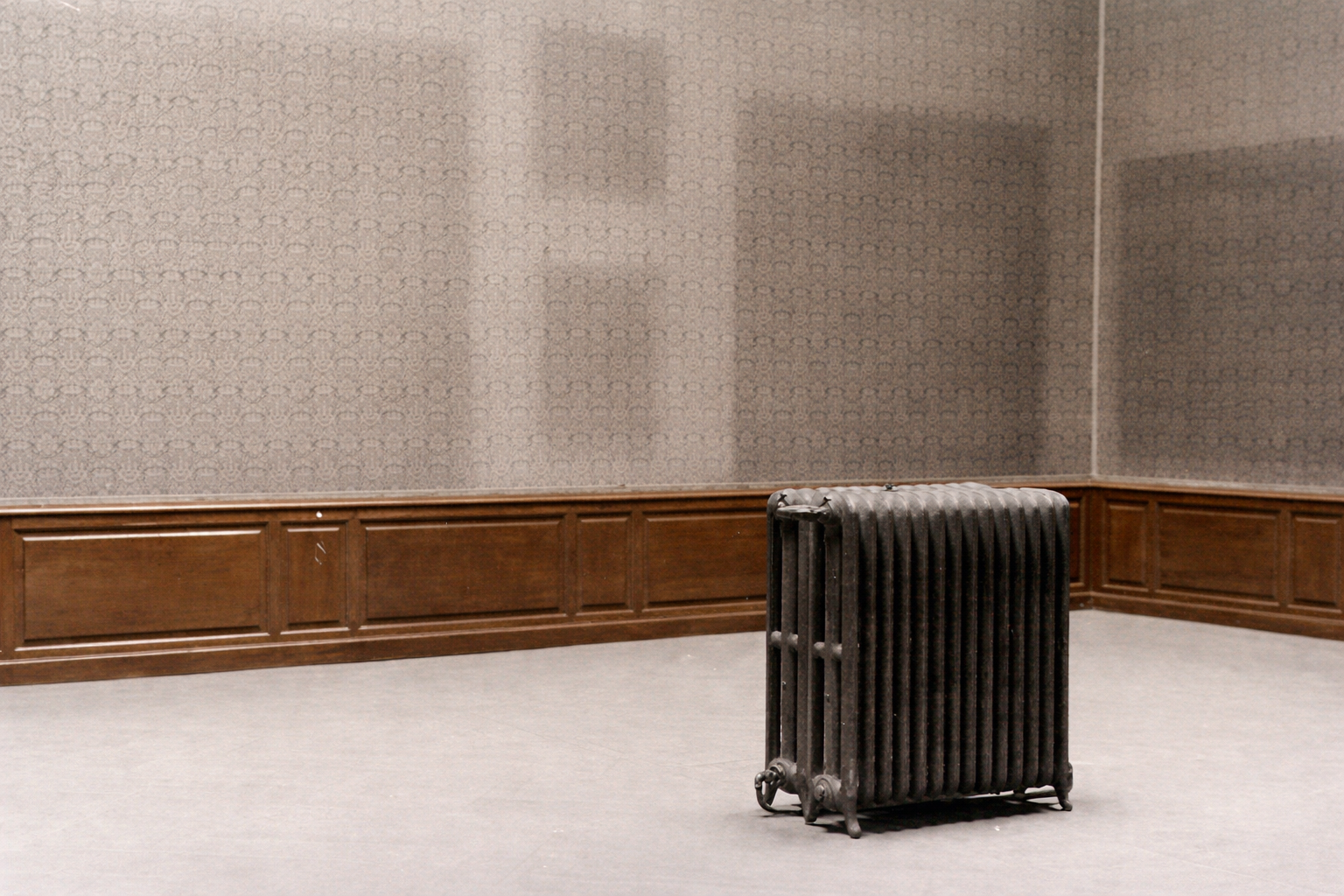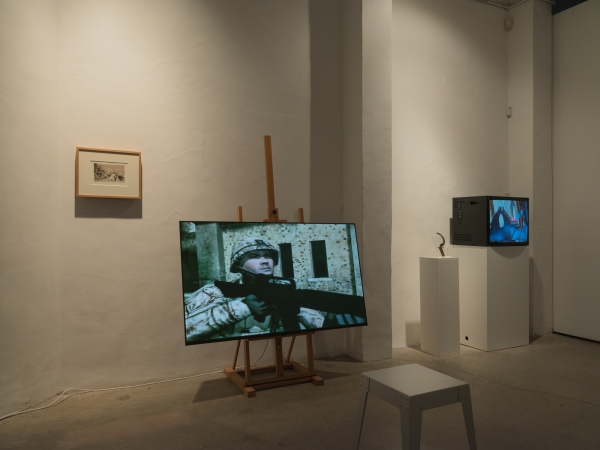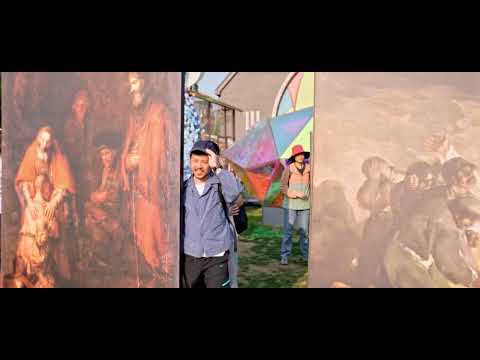
Postcapital Goyang Studio, National Museum of Contemporary Art, Korea

Posted: August 19th, 2010 | Filed under: English, Korean | Tags: , , , , | No Comments »

Postcapital Archive (1989-2001)

Daniel G Andújar

13th. August -12th.September

Goyang Studio, National Museum of Contemporary Art, Korea

Tags: , , , ,

Related posts


PSYCHOECONOMY! Corporate Summit Madrid 2010

Posted: June 28th, 2010 | Filed under: English, Español | Tags: , , , , | No Comments »

“On July 2 and 3, 2010, four world corporate and state leaders will meet in Madrid. The Summit will take place at a time when the world confronts the worst economic crisis since the Second World War. Their goal: to elaborate a declaration seeking to reverse the status of the global economy.”
—————————————————————-
PSYCHOECONOMY! is an artistic platform for discussion and research, proposing an alternative approach on various global issues. Each edition involves an artist’s meeting, a public event and the publication of the resulting conclusions, documents, texts and graphic materials.
Artists participating in the first issue:

Daniel García Andújar ()
Fran Ilich (SpaceBank)
Georg Zoche (Transnational Republic)
Gustavo Romano (TimeNotesBank) Read the rest of this entry »

Tags: , , , ,

Related posts


Postcapital Archive, Seoul extended till June 20, Istanbul till June 27

Posted: June 11th, 2010 | Filed under: English | Tags: , , , , , , , , | No Comments »

Postcapital Archive (1989-2001)
A Project by Daniel G. Andújar /
curated by , Nathalie Boseul Shin
Total Museum of Contemporary Art, Seoul

Exhibition will be extended till June 20, 2010

Postcapital Archive (1989-2001)
curated by
April 21 – June 27, 2010
Opal Contemporary Art Space,

Exhibition  till June 27, 2010

Daniel Garcia Andujar’s project Postcapital Archive 1989-2001 functions as a multimedia installation and open databank which is based on a digital archive of over 250,000 documents such as texts, audio files, and videos from the Internet compiled by the artist over the past ten years. “Postcapital” addresses social, political, economic, and cultural worldwide changes over the last two decades in between two important moments as 1989 fall of the Berlin Wall and the attacks on September 11, 2001. With the Postcapital Archive 1989-2001 project, Daniel Garcia Andujar calls attention to “networked archives” based on the interpretation of information. Read the rest of this entry »

Tags: , , , , , , , ,

Related posts


Postcapital Archive Seoul Opening 14.May 2010, 6pm

Posted: May 8th, 2010 | Filed under: English, Korean | Tags: , , , , , | No Comments »

Tags: , , , , ,

Related posts


Postcapital Archive Seoul. 14. May 2010 13 June 2010. Total Museum of Contemporary Art

Posted: April 30th, 2010 | Filed under: English, Español, Korean | Tags: , , , , , | No Comments »

Tags: , , , , ,

Related posts


OPAL Contemporary Art Space. Postcapital Archive

Posted: April 21st, 2010 | Filed under: English | Tags: , , , , , | No Comments »

Daniel Garcia Andújar
POSTCAPITAL.ARCHIVE 1989-2001

21 April – 27 June 2010

Curated by

OPAL opens with Daniel Garcia Andújar’s project Postcapital.Archive 1989-2001, on April 21, 2010. The project functions as a multimedia installation and open databank which is based on a digital archive of over 250,000 documents such as texts, audio files, and videos from the Internet compiled by the artist over the past ten years. “Postcapital” addresses social, political, economic, and cultural worldwide changes over the last two decades in between two important moments as 1989 fall of the Berlin Wall and the attacks on September 11, 2001. With the Postcapital.Archive 1989-2001 project, Daniel Garcia Andújar calls attention to “networked archives” based on the interpretation of information. Read the rest of this entry »

Tags: , , , , ,

Related posts


mono special issue e-valencia.org

Posted: April 1st, 2010 | Filed under: English | Tags: , , , , , , , , | No Comments »


mono special issue e-.org is published in the framework of the exhibition “On Difference #1. Local contexts – hybrid spaces”, which took place at Württembergischer Kunstverein Stuttgart from May 21 to July 31 2005.

Liberate

Tags: , , , , , , , ,

Related posts


Daniel G. Andújar, Lapses

Posted: February 22nd, 2010 | Filed under: English | Tags: , , , | No Comments »

In front of the photograph of my mother as a child, I tell myself: she is going to die: I shudder,like Winnicott’s psychotic patient, over a catastrophe, which has already occurred.Whether or not the subject is already dead, every photograph is this catastrophe.
Roland Barthes

Başak Şenova*

Today, media collects and distributes images for us with immense speed and magnitude.We are surrounded by these images; and more than ever, all communication technologies -as efficient apparatuses of late capitalism- infuse our lives with vast attacks of images. Nevertheless, we have also learned from the same sources that the meaning of any image is dependent on the context. It is not only the images, but also ideologies and realities behind the images that are being created for us.In this respect, “Postcapital”, as an ironically questioning archive developed by Daniel G. Andújar, shoots back with the same gun by detecting lapses in our perceptionand explanation of political, cultural, economic, social, and even technological conditions and realities. He indexes our cognitive mechanisms. Read the rest of this entry »

Tags: , , ,

Related posts


Prácticas artísticas de intervención. Entrevista con Daniel G. Andújar. ALICIA MURRÍA

Posted: February 19th, 2010 | Filed under: English, Español | Tags: , , , , , | No Comments »


ARTECONTEXTO+N25

Con el título La exposición: nuevas prácticas, viejos contenedores el dossier de nuestro primer número del año reflexiona –a través de las firmas de José Manuel Costa, Christiane Paul, Juan Antonio Álvarez Reyes y Mónica Núñez Luis– sobre las exigencias de las nuevas formulaciones artísticas y su difícil encaje en modelos expositivos y estructuras museales que se sustentan en esquemas tradicionales tanto en lo funcional como en lo ideológico, más allá de que su arquitectura adopte fórmulas novedosas. Mientras, Daniel G. Andújar, en una entrevista con Alicia Murría, analiza el panorama que han abierto las tecnologías señalando la responsabilidad del artista ante estos cambios. Read the rest of this entry »

Tags: , , , , ,

Related posts


Ways of Working. Iris Dressler vs Daniel G. Andújar

Posted: December 19th, 2009 | Filed under: English | Tags: , , , | No Comments »

Corversation

The Unavowable Community

Iris Dressler: In one of our recent conversations, you described how the machinery of the bigger art institutions alienates the artists from their work to a certain extent. You put it more or less in the following way: the artist, arriving at the museum to install his or her works, is sent to luxury hotels, restaurants and bars, while an armada of professionals—technicians, restorers, architects, designers, coordinators, assistants and so forth—care for the ‘proper’ presentation and communication of his of her work, following the standards of the respective institution. This is not to mention that at this moment the curator and the PR and education departments have long since defined—again in line with the conventions of the respective house—the ways of mediating the artist’s works. The artist, finally arriving at the ‘ready-to-go’ exhibition, might be shocked, as he or she no longer recognises his or her work the way it is embodied in and absorbed by the corporate setting. But it is too late: the press, board, VIPs and the like are already standing by. These attitudes and workflows of the institutional machinery are of course not a new phenomenon if you just remember the cartoon-like diagram Average Day at the Museum by the MoMA from the 1940s. But it seems that until now museums in particular are largely ignoring over 40 years of ongoing and quite diverse practices as well as discourses of institutional critique. They instead basically submit themselves far too voluntarily to almost phantasmal political pressures regarding the museum’s city marketing and tourist impact, fixating on irrational growth in visitor numbers and pulling in lucrative and glamorous private corporations. In my view, these politically indoctrinated ‘missions’ of the museum (which go hand in hand with corporate demands) have nothing to do—as is often claimed—with the financial needs of museum maintenance. They are solely about putting the museum on a prestigious stage for business and politics. By this logic, the artist seems to be a sort of alien, a disruptive factor that needs to be sedated to fit in with the museum’s rhetoric.

Daniel G. Andújar: Artistic practice, as I conceive it, must be transformed into a form of ‘resistance’ against a model obstinately aimed at prevailing in a space of relations that is becoming more and more confused, normalised, globalised, hierarchical, diffused, standardised and so on. Our society, economy and culture are founded upon interests, values, institutions, and systems of representation that, in general terms, limit creativity, confiscate and manipulate the artist’s work and divert his energy toward sterile confrontation and discouragement. Read the rest of this entry »

Tags: , , ,

Related posts